Charlotte Weitze (Denmark)
Charlotte Weitze was born in 1974 in Lyngby, north of Copenhagen and studied folkloristics at the University of Copenhagen. Her debut – a collection of stories titled “Skifting” (Changling, 1996) – received the Danish Book Forum’s debut prize. Like much of her subsequent works, this book presented the readers with an unusual universe that blurs the boundaries between the man-made world and that of nature in order to explore themes of identity, history and our sense of belonging. Weitze’s educational background gives her a unique ability to merge reality with stories and fairy tales; to create a meeting between everyday life and a magical universe.
In recent years, Weitze has used her unique ability to mix such themes to draw attention to the climate crisis and humanity’s reluctance to acknowledge it. Her novel Rosarium (2022), which was translated into Estonian („Rosaarium”, Varrak, trans Eva Velsker) in 2024, blends folktales, scientific notes, letters, and everyday realism to tell the story of six generations that hold the seed to a particular life form between the world of plants and that of humans. The novel was nominated for the Danish Radio’s prize for best novel of the year and cemented the writer’s ability to merge genres, work with scientific as well as historical material, and create a unique kind of sci- or cli-fi that points towards a world in which humans are no longer the dominant force.
Weitze has continued her exploration of the climate crisis with her essay collection The Climate and the Artist (2022) that ties her personal story and thoughts to larger, more existential questions about global warming and the uncertainty it causes. Her most recent novel “Ulvemælk” (Wolf Milk), takes place in 2040 in a world dominated by AI as well as in 1872, when the folk memory collector Evald Tange is collecting stories from wise women.
In 2025, Charlotte Witze received the Danish Arts Foundation’s lifetime recognition award for her soulful prose, unusual narratives and excellent storytelling that “invite us to reflect on universal, existential topics as well as life in a future, climate-changed world.” Her most recent novel was just nominated for the Nordic Council’s Literature Prize.
In addition to the novel Rosarium, Charlotte Weitze’s short story collection “Mørkets Egne” (The Realm of Darkness, 2005) has also been translated into Estonian („Pimeduse pärusmaa”). It was published by Pegasus Publishing in 2008 in translation by Kai-Mai Aja.
Mie Mortensen
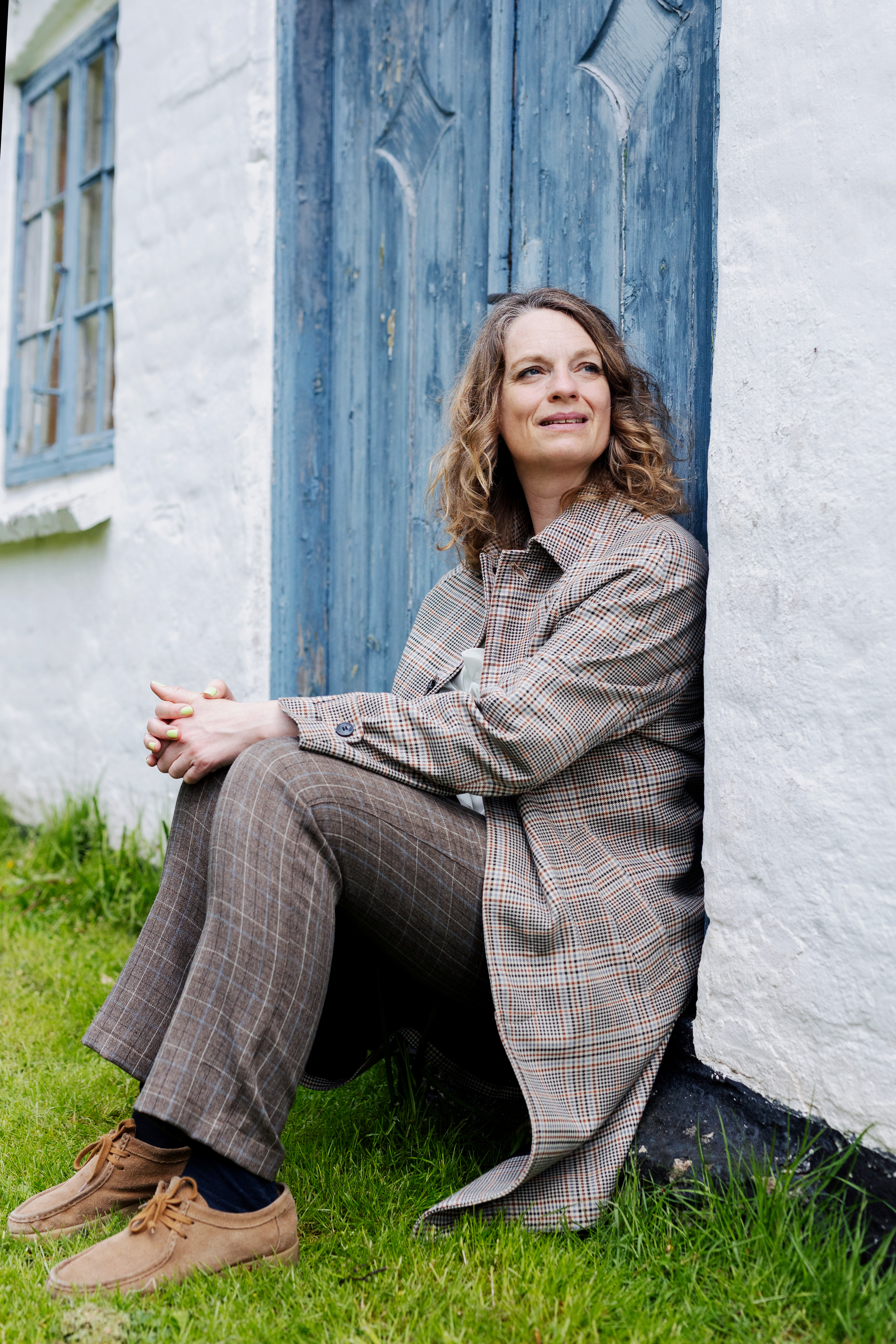
Danish writer Charlotte Weitze in Conversation with Mie Mortensen, Visiting Lecturer in Danish Language and Literature, University of Tartu
Monday, May 11th
16:00
Tartu Public Library
Opening the Black Box: All Her Beautiful Wolfmilk – film screening, reading, discussion
Thursday, May 14th
20:00
Aparaaditehas Culture Factory, Hall of Love